
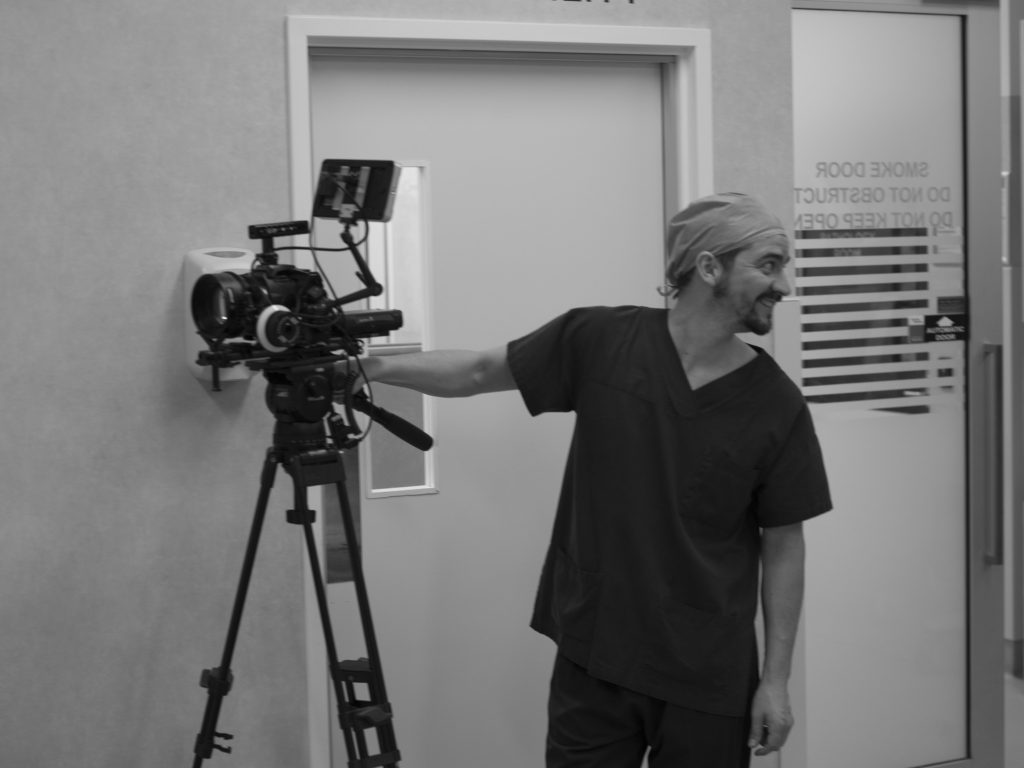
Recently, we worked on a project where a surgeon was asked to speak directly to camera about his practice and areas of expertise. It’s a scenario we’re seeing more and more—and for good reason.
In today’s digital-first world, talking on camera has become an essential communication tool, particularly in healthcare. Video helps build trust, humanises expertise, and allows patients to connect with the person behind the profession.
As healthcare professionals, many of us are comfortable speaking at conferences or presenting to peers. I’d even say I’m confident in that setting. But when I first started talking to camera for social media, I found it surprisingly uncomfortable. It took practice, repetition, and confidence-building.
What I quickly realised, however, was that when sharing the story behind Medical Sphere, my charity work, and research, people didn’t just consume the information—they connected with the person. Video became a powerful way to educate, engage, and build trust.
This is now a frequent conversation we have with our clients: how and to what extent video should be incorporated into their practice’s digital strategy.
Below are some practical tips we often share with healthcare professionals preparing to speak on camera.
Overall Delivery
- Film yourself beforehand and time the recording to ensure it stays concise.
- Attention spans (especially online) are short, so keep your message punchy and focused.
- Structure your video clearly with an introduction, body, and conclusion.
Introduction
- Start with something simple, clear, and approachable.
- Suggested wording: “I’m Dr X [full title on screen], an internationally trained orthopaedic surgeon treating patients with knee, hip, and elbow conditions.”
- Keep your spoken language in lay terms and allow on-screen text to carry formal titles.
Tell Your Story
Your story matters—and it resonates far more than a list of credentials.
- Why did you choose medicine?
- Why this specialty?
- What do you love most about your work?
These personal insights help patients feel reassured and understood. When discussing technical aspects of surgery, avoid too much detail. Simplicity is key—focus on clarity rather than complexity.
Content Balance
- Consider what patients can already read on your website and avoid repeating it verbatim in video content.
- Video should feel personal and engaging, not overloaded with information or clinical jargon.
On-Camera Tip
Think in terms of being active rather than passive in your delivery. This is something I consciously remind myself every time I’m on camera. An active mindset naturally makes your presentation feel stronger, more confident, and more engaging.
Video is no longer a “nice to have” in healthcare—it’s a powerful way to connect, educate, and build trust with your audience.